Equity Research Analysis: VanEck Ethereum ETF (ETHV)
|Blank Capital Research Unit|Spot: $27.17
Price$27.17
Composite Score32.2/100
RatingAVOID (1★)
Rank#4357 OF 7,333
Market Cap$0
IMPORTANT DISCLAIMER: Blank Capital Research ("BCR") is a technology platform, not a registered investment advisor or broker-dealer. The algorithmically generated signals, scores, and rankings provided on this site ("God Mode" Signals) are for informational and research purposes only and do not constitute financial advice, investment recommendations, or an offer to sell or solicit an offer to buy any securities.
HYPOTHETICAL PERFORMANCE RESULTS: The "timing scores" and "regime signals" displayed are based on quantitative models. Hypothetical or simulated performance results have certain inherent limitations. Unlike an actual performance record, simulated results do not represent actual trading. Also, since the trades have not actually been executed, the results may have under-or-over compensated for the impact, if any, of certain market factors, such as lack of liquidity.
RISK OF LOSS: Trading in financial markets involves a high degree of risk and may result in the loss of your entire investment. Data provided by third-party sources (Intrinio, Snowflake) is believed to be reliable but is not guaranteed for accuracy or completeness. Past performance is not indicative of future results.
© 2026 Blank Capital Research. All rights reserved. System Version: Aegis V8 (God Mode).
Verdict
Quantitative factor alignment verified for current market regime.
Quant Score
Rank
#4357
Positioning
Market Dominance
Finance, Insurance, And Real Estate
Trading
$0
Pending
Detailed business profile pending verification.
Headcount
—
HQ Base
NEW YORK, New York
Get full access to institutional-quality research tools with Blank Capital Pro.
Upgrade to ProStarting at $19.99/mo
Get full access to institutional-quality research tools with Blank Capital Pro.
Upgrade to ProStarting at $19.99/mo
Get full access to institutional-quality research tools with Blank Capital Pro.
Upgrade to ProStarting at $19.99/mo
Get full access to institutional-quality research tools with Blank Capital Pro.
Upgrade to ProStarting at $19.99/mo
Get full access to institutional-quality research tools with Blank Capital Pro.
Upgrade to ProStarting at $19.99/mo
| Stock | Rating | Score▼ | Quality | Value | Momentum | P/E | EV/EBITDA | ROE | ROA | Gross Mgn | Op Mgn | Net Mgn | Rev Growth | Div Yield | D/E | Mkt Cap | AUDIT |
|---|---|---|---|---|---|---|---|---|---|---|---|---|---|---|---|---|---|
$SII SPROTT INC. | 75 | 91 | 87 | 98 | - | - | 15.7% | 12.8% | 48.9% | 37.0% | 28.8% | 14.9% | 2.5% | 0.0x | $1.1B | VS | |
$PUK PRUDENTIAL PLC | 73 | 88 | 97 | 80 | - | - | 13.2% | 1.4% | 100.0% | 97.0% | 23.8% | 11.8% | 2.7% | 5.0x | $21.5B | VS | |
$NMR NOMURA HOLDINGS INC | 72 | 81 | 92 | 87 | - | - | 9.9% | 0.6% | 84.5% | 70.0% | 7.3% | 14.9% | 0.0% | 923.0x | $18.3B | VS | |
$PSLV Sprott Physical Silver Trust | 69 | 82 | 80 | 98 | - | - | 17.3% | 17.7% | 100.0% | 100.0% | 100.0% | 1643.8% | 0.0% | 0.0x | $5.0B | VS | |
$UFCS UNITED FIRE GROUP INC | 68 | 81 | 93 | 76 | 5.0x | 3.5x | 13.2% | 4.1% | 99.9% | 14.7% | 11.1% | 9.2% | 2.1% | 16.0x | $775M | VS | |
$SLF SUN LIFE FINANCIAL INC | 68 | 83 | 95 | 63 | - | - | 12.6% | 0.9% | 32.0% | 31.3% | 7.9% | -12.9% | 4.3% | 24.0x | $37.8B | VS | |
$CBOE Cboe Global Markets, Inc. | 68 | 75 | 63 | 77 | 21.3x | 15.7x | 24.0% | 13.7% | 41.7% | 32.4% | 26.4% | 8.2% | 1.1% | 30.0x | $25.7B | VS | |
$PHYS Sprott Physical Gold Trust | 67 | 64 | 82 | 91 | - | - | 22.5% | 22.8% | 101.8% | 100.0% | 100.0% | 138.9% | 0.0% | 0.0x | $8.4B | VS | |
$VTMX Vesta Real Estate Corporation, S.A.B. de C.V. | 67 | 69 | 77 | 80 | - | - | 8.8% | 5.8% | 98.7% | 75.7% | 88.5% | 17.6% | 4.3% | 34.0x | $2.2B | VS | |
$GLDM World Gold Trust | 66 | 54 | 85 | 92 | 11.3x | 11.3x | - | 27.1% | 100.0% | 98.9% | 459.9% | 333.4% | 0.0% | 0.0x | $43.7B | VS | |
$ETHV VanEck Ethereum ETF | 32 | 31 | 25 | 39 | - | - | - | -1.7% | - | - | - | 98.6% | - | - | $0 | ||
| SECTOR BENCH | - | - | - | - | - | 11.9x | 7.8x | 8.9% | 1.2% | 76.5% | 17.0% | 21.5% | 10.8% | 1.9% | 0.5x | - | REF |
VanEck Ethereum ETF (ETHV) receives a "Avoid" rating with a composite score of 32.2/100. It ranks #4357 out of 7,333 stocks in our coverage universe and carries a 1-star rating. Ratings are driven by a 6-factor quantitative model measuring quality, value, momentum, investment, stability, and short interest.
Sign in to join the discussion.
YOY expansion rate
Asset base utilization
Executive Directory Unavailable for ETHV
31
30
11
Audit Verdict: Lower quality and stability scores may indicate governance concerns.
No recent insider transactions available for ETHV
Lagging peers — losers tend to keep underperforming
Expensive relative to fundamentals — limited margin of safety
Weak fundamentals — higher risk of value trap
High volatility — wider range of outcomes increases timing risk
Aggressive spending — empire-building risk, dilutive growth
Below-average composite — caution warranted
Get full access to institutional-quality research tools with Blank Capital Pro.
Upgrade to ProStarting at $19.99/mo
No analyst ratings for ETHV.
View All RatingsInsufficient data for Financial Analysis
| Factor | Global | Sector | Tilt |
|---|---|---|---|
| PROFITABILITY | 31 | 43 | -12DRAG |
| MOMENTUM | 39 | 38 | +1NEUTRAL |
| VALUATION | 25 | 9 | +16ALPHA |
| INVESTMENT | 30 | 39 | -9DRAG |
| STABILITY | 11 | 6 | +5NEUTRAL |
| SHORT INT | 52 | 62 | -10DRAG |
Global = full universe. Sector = relative to industry peers. Positive tilt indicates idiosyncratic strength.
Insufficient data for ROIC calculation
GM N/A vs sector 77%, OM N/A vs sector 17%
Capital turnover N/A
Rev growth 99%
Interest coverage N/A
Composite assessment of profitability, capital efficiency, and financial strength. Top-tier entities demonstrate sustainable cash flow generation and elite competitive moats.
Profit generated per dollar of shareholder equity
Efficiency of asset utilization
Pricing power and cost efficiency
Core business profitability
Bottom-line profitability
The Quality factor evaluates the persistence and magnitude of realized cash flows. Companies with scores >70 exhibit superior pricing power and structural financial resilience through diverse economic regimes.
Our uncertainty rating tracks the predictability of future cash flows and potential for permanent capital loss. Moderate visibility with standard industry cyclicality.
Our quantitative model flags VanEck Ethereum ETF with an Avoid rating, assigning a composite score of 32.2/100 and 1 out of 5 stars. Ranked #4357 of 7,333 stocks, ETHV falls in the bottom tier across key factors. Historically, stocks with this profile have faced elevated risk of underperformance and capital loss.
ETHV's quality score of 31/100 is below average, suggesting challenges with profitability or capital efficiency. Investors should examine whether management is actively addressing these weaknesses or if they reflect structural industry headwinds.
ETHV registers a value score of just 25/100, suggesting the stock trades at a significant premium to its fundamental metrics. High-premium valuations like this require strong future execution to avoid multiple compression, and downside risk is elevated if growth disappoints.
VanEck Ethereum ETF's investment score of 30/100 suggests limited reinvestment activity. Key growth metrics include revenue growth of 98.6% vs. a sector average of 10.8% and a return on assets of -1.7% (sector: 1.2%). While this can be positive for mature, cash-generative businesses returning capital to shareholders, it may also signal a lack of growth opportunities or management conservatism.
ETHV is currently showing below-average momentum at 39/100, which may indicate weakening institutional interest or negative sentiment shifts. Revenue growth stands at 98.6% year-over-year, while a beta of 1.84 reflects its sensitivity to broader market moves. Investors should note that declining momentum can precede further price weakness, though contrarian opportunities sometimes emerge at these levels.
VanEck Ethereum ETF registers a low stability score of 11/100, indicating high volatility and potentially stressed financial conditions. Key stability metrics include a beta of 1.84. Stocks at this level carry elevated capital loss risk and may be unsuitable for conservative portfolios without careful risk management.
The short interest score of 52/100 for ETHV suggests somewhat elevated bearish positioning by institutional traders. Specific risk factors include high market sensitivity (beta: 1.84), micro-cap liquidity risk. With a $0 market cap (micro-cap), VanEck Ethereum ETF may experience above-average volatility. Investors should consider whether the short thesis has merit or if it creates a potential short-squeeze opportunity.
VanEck Ethereum ETF is a micro-cap company in the Finance, Insurance, And Real Estate sector, ranked #0 of 50 in its sector (100th percentile) and #4357 of 7,333 overall (41st percentile). This top-quartile standing reflects exceptional competitive strength relative to Finance, Insurance, And Real Estate peers.
While ETHV currently exhibits a AVOID profile, superior opportunities exist within the FINANCE, INSURANCE, AND REAL ESTATE sector. Our model identifies several "Strong Buy" candidates with higher quality scores and more attractive valuations among direct industry competitors.
View Top Finance, Insurance, And Real Estate Alpha →Quant Factor Profile
Upgrade catalyst
Improvement in Stability (11) would have the largest impact on the composite score.
AUDIT DATA AS OF SEP 30, 2025 (Q2 FY2025)
We rate VanEck Ethereum ETF (ETHV) as Avoid with a composite score of 32.2/100 at a current price of $27.17. The stock falls in the bottom quintile of our universe across key quantitative factors, and the multi-factor weakness suggests a high probability of continued underperformance.
The rating is primarily driven by strength in momentum (39th percentile) and quality (31th percentile), which together account for the majority of the composite score. Offsetting weakness in stability (11th percentile) and value (25th percentile) tempers our overall conviction. We assign a No Moat rating (31/100), High uncertainty, and Poor capital allocation.
Key items to watch: momentum to confirm whether the current price trend has legs; sustainability of the current growth rate; valuation compression risk if growth disappoints. Any material change in these dynamics could warrant a reassessment of our rating. The moat trend is stable, which suggests the competitive landscape is stable for now.
VanEck Ethereum ETF holds a top-quartile position (#0 of 50) within the Finance, Insurance, And Real Estate sector, based on our composite quantitative scoring across quality, value, momentum, and stability factors. The composite score of 32.2/100 places it at rank #4357 in our full 7,333-stock universe. At N/A in market capitalization, VanEck Ethereum ETF is a small-cap player in the Finance, Insurance, And Real Estate space, which limits certain scale advantages but may allow for more agile strategic execution.
Revenue is growing at 99%, though momentum at the 39th percentile suggests the market has not yet fully recognized this trajectory. This potential disconnect between fundamental improvement and market recognition could represent an opportunity for patient investors if the growth trend persists.
Margin data is not available for VanEck Ethereum ETF, which limits our assessment of the company's cost structure and operating efficiency. We rely on factor-based signals to infer business quality in the absence of detailed margin data.
At a current price of $27.17, VanEck Ethereum ETF is trading at a premium to fundamental value. Our value factor score of 25/100 reflects a composite assessment across multiple valuation metrics including price-to-earnings, price-to-book, EV/EBITDA, and price-to-sales ratios relative to both sector peers and the broader market. The premium valuation implies the market is pricing in significant future growth or quality improvements that are not yet fully reflected in current fundamentals.
Valuation multiples are not available for this company, which limits our ability to assess relative pricing. We rely more heavily on factor-based valuation signals in such cases.
Revenue growth of 99% confirms the business is expanding its addressable market — growth at this level typically supports multiple expansion and attracts institutional capital.
The Avoid rating (composite 32.2/100) reflects multi-factor weakness, and historically, stocks in this scoring range have underperformed the market by a meaningful margin.
Below-average quality (31th percentile) raises durability concerns about the fundamental profile and increases the risk of negative earnings surprises.
High beta of 1.84 means amplified losses in market selloffs — in a broad market correction, this stock would likely decline more than the index.
We assign a High uncertainty rating to VanEck Ethereum ETF. Key risk factors include elevated market sensitivity (beta of 1.84), below-average price stability (11th percentile), weak quality scores (31th percentile). The wide range of potential outcomes widens our fair value estimate and increases the possibility of permanent capital impairment. Investors considering this name should size positions accordingly and demand a meaningful margin of safety before initiating.
Specific risk factors that inform our assessment include: elevated market sensitivity (beta of 1.84); below-average price stability (11th percentile); weak quality scores (31th percentile). Each of these factors independently widens the distribution of potential outcomes, and in combination they create a risk profile that demands careful position sizing. The stability factor at the 11th percentile and quality factor at the 31th percentile provide a quantitative summary of the overall risk landscape.
We identify limited risk mitigants at this time, which contributes to our high uncertainty assessment. Investors should monitor for improvement in balance sheet metrics, margin stability, and business predictability that could warrant a downgrade in our risk assessment over time.
We rate VanEck Ethereum ETF's capital allocation as Poor. Key concerns include weak asset returns (ROA -1.7%). Exemplary capital allocators generate ROE above 20% and maintain conservative leverage — VanEck Ethereum ETF significantly underperforms these benchmarks, raising questions about management's ability to create shareholder value.
Investors should scrutinize management's reinvestment decisions and balance sheet trajectory before committing capital. Poor capital allocation often compounds over time: overlevered balance sheets limit strategic flexibility, while low returns on capital destroy shareholder value. We would need to see sustained improvement in profitability metrics and balance sheet discipline before considering an upgrade.
In summary, VanEck Ethereum ETF receives a Avoid rating with a composite score of 32.2/100 (rank #4357 of 7,333). Our quantitative framework assigns a No Moat (31/100, trend: stable), High uncertainty, and Poor capital allocation. The average factor score across quality, value, momentum, stability, and investment is 27/100.
Our analysis does not support a constructive view on VanEck Ethereum ETF at this time. The combination of limited competitive advantages, high uncertainty, and poor capital allocation suggests unfavorable risk-reward at current levels. We recommend investors avoid new positions and existing holders consider reducing exposure.
Analysis derived from Blank Capital Research quantitative terminal. For informational purposes only. No trade solicitation. Past performance not indicative of future results. Consult a qualified advisor.
We do not assign VanEck Ethereum ETF a meaningful economic moat, scoring 31/100 on our composite assessment. Current fundamentals do not demonstrate the kind of durable competitive advantages — such as superior returns on invested capital, margin superiority, or reinvestment efficiency — that would protect the company from competitive erosion over the long term. The highest-scoring pillar, growth durability, reached only 13/20.
The strongest moat sources are growth durability (13/20) and margin superiority (10/20). Rev growth 99%. GM N/A vs sector 77%, OM N/A vs sector 17%. These pillars form the core of VanEck Ethereum ETF's competitive identity and are the primary drivers of excess returns in our framework.
Areas of relative weakness include reinvestment efficiency (0/20) and financial resilience (2.5/20). Capital turnover N/A. Improvement in these areas could meaningfully widen the moat over time, while deterioration would be an early warning of competitive erosion.
Our moat trend assessment is Stable. Multi-year ROIC and operating margin trajectories show neither meaningful improvement nor deterioration, suggesting the competitive position is steady. We expect VanEck Ethereum ETF's moat profile to remain largely unchanged absent a material shift in return on capital or industry dynamics.
Key profit drivers include robust top-line growth of 99% expanding the revenue base. Our analysis indicates that profit quality raises some durability concerns, with the quality factor at the 31th percentile.
Return metrics include ROA of -1.7%. Relative to the Finance, Insurance, And Real Estate sector, sector comparison data is limited.
The balance sheet reflects revenue growth of 99%. Overall balance sheet health is adequate for the current business environment.
Above 50MA
37.18%
Net New Highs
+51081

XRP, the native token of the XRP Ledger, has lost over 40% of its value in the past 12 months but may present a buying opportunity. Following the SEC lawsuit settlement in August, major crypto exchanges relisted XRP and spot ETFs were approved in late 2025. Ripple's application for a U.S. bank charter, expansion of its stablecoin RLUSD, and new EVM-compatible sidechain could drive increased XRP adoption. The article suggests a modest $50 investment could be worthwhile if a new crypto market rally begins.

Bitcoin faces significant competition not from other cryptocurrencies, but from major asset classes including AI companies, U.S. housing market ($55 trillion), and U.S. Treasuries ($29 trillion). With Bitcoin trading 44% below its peak and down 21% in 2026, investors should recognize that capital is flowing toward these alternative investments rather than crypto. Bitcoin supporters must maintain a long-term perspective as adoption remains gradual.

The article explores ways to generate passive income from cryptocurrency holdings through staking, lending, and DeFi platforms. While platforms like Aave and Compound offer APYs around 4-5% on stablecoins, staking cryptocurrencies like Ethereum, Solana, and Cardano through exchanges or ETFs is presented as a safer alternative. However, returns are modest compared to traditional savings accounts, and crypto volatility can outweigh yield gains. Staking ETFs are expected to become more popular in 2026.

Ethereum is positioned as a potential leading AI cryptocurrency, with founder Vitalik Buterin suggesting blockchain technology could serve as an economic base layer for AI development. The article explores how Ethereum could enable decentralized AI tools and agent coordination, though questions remain about monetization and practical implementation. Several AI projects are already building on Ethereum, including ChainGPT, Assemble AI, and Virtuals Protocol.
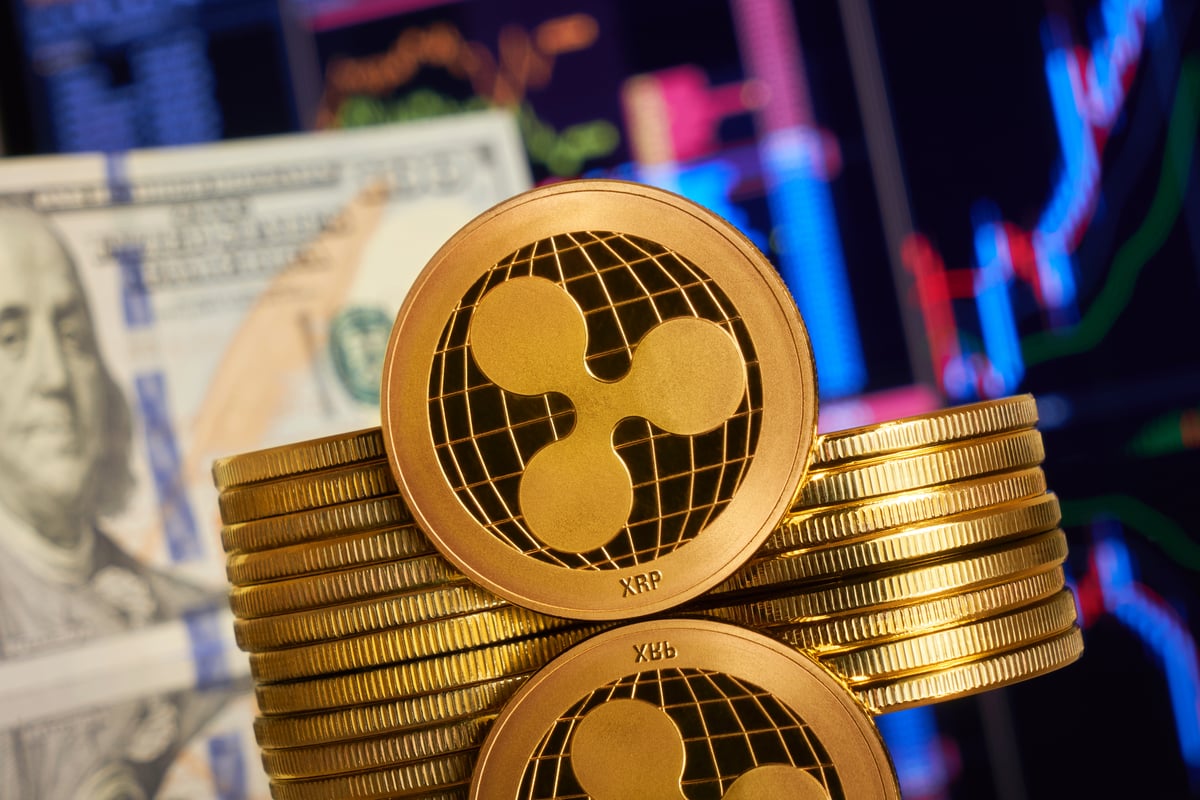
XRP has dropped over 50% from its January 2025 peak of $3.30 to $1.40, making its valuation more reasonable. However, analyst Anders Bylund argues that a lower price alone isn't sufficient reason to buy. He calls for concrete evidence of real-world adoption, such as transparent transaction volume data from Ripple Labs, a major global bank publicly committing to using XRP for cross-border payments, or competitive advantages against stablecoins and CBDCs. Despite nearly a decade of partnerships and pilots, XRP has yet to demonstrate meaningful transaction volume in its intended use case of facilitating international payments.